Paul starts with a question. He loves this style of teaching. Over and again, he will ask a hypothetical question, then answer it himself.
This time it is an obvious one. If there is no difference between a Jew and a Gentile, is there any advantage in being a Jew?
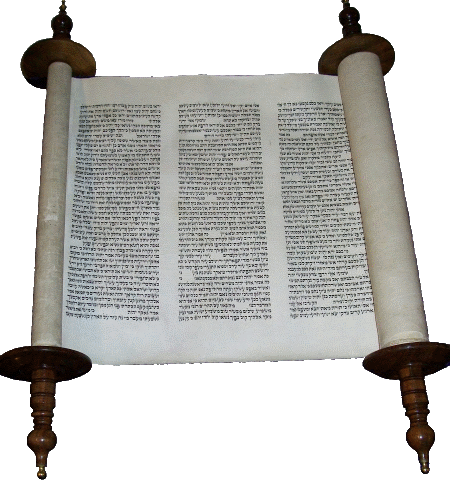
One answer would be that God’s written words, handed down through Moses and the prophets, and essential to salvation, were entrusted to the people of Israel, so that the Jew has a head start when it comes to learning about God. In the same way, children today brought up through Sunday School already know the Bible stories and learn Bible quotations.
No, comes the reply, with its Old Testament quotation. We humans are not in a position to criticise God for what he does. The quotation is from Psalm 51:4, where David confesses his great sin with Bathsheba. Even the national hero David was a sinner, yet God chose to work through him.
As sinners like David, we can be thankful for God’s mercy, which enhances his reputation. But God is not obliged to forgive us. He is quite within his rights to punish us for our sins. If it were not so, he could never bring the Day of Judgment.
In that case, we may as well carry on sinning, because it brings glory to God every time he forgives us. Some even accused Paul of downgrading the seriousness of sin, when he preached that we are saved by God’s grace. He dismisses that claim as pure sophistry.
The next question: Paul has argued in verse 1,2 that the Jews had the advantage of being entrusted with the Law. Now he asks, does that make us (the Jews) more righteous? The answer is ‘No!’ Both Jews and Greeks are sinners. The apostle proves his point with an amazing set of six separate Old Testament quotations to demonstrate that Jews are sinners as well as Gentiles.