Paul's Letter to Believers in Rome
by David M Pearce
Romans Chapter 5
Rejoicing In Hope
Verses 1–2We have so much to be thankful for, when we are justified by faith. Peace with God is incredibly special. Now, we live in hope of being clothed with the glory of God – being made in his likeness in body and mind, as Paul writes in Colossians 3:4.
Verses 3–5The apostle can rejoice even when he has to endure hardship and persecution for the sake of Christ. He knows that suffering is part of the preparation we must go through before we are ready for the Kingdom. We have to learn to endure patiently, and that produces character. Hope is the next virtue we develop – the quality of hanging on even when the sky is dark and others are giving up, because like Abraham we are convinced God is going to bring the Kingdom in his own good time. The wonderful love of God has found a home in our hearts. It came to us via the Holy Spirit, first through the words of Jesus and the apostles, and then through the Bible which taught us about them.
The Love of God
Verses 6–8God saw that we were weak and unable to save ourselves, so he acted himself, as Isaiah predicted (Isaiah 59:15,16).The right time was the time God had prepared from antiquity, a time when his people were longing for deliverance from the Roman occupation, but when the same Roman power had prepared an infrastructure of roads and law and order that would facilitate the gospel being preached to the Gentiles. The New English Bible in Hebrews 9:26 calls it ‘the climax of history’.
Heroic self-sacrifice is rare. In most cases the attempt to rescue a struggling victim is made spontaneously. Parents have been known to die in place of their children by pushing them out of danger. But a pre-meditated death to save another is exceedingly rare, especially if that person is a bad person. Paul’s point is that God sent his son to deliver us when we were still sinners, and some of us were adulterers, thieves and liars – all the things God hates, 1 Corinthians 6:9–11. The cost of that sacrifice to our Father is underlined by the Apostle John when he says: ‘God so loved the world that he gave his only Son, that whoever believes in him should not perish but have eternal life’ (John 3:16). But we must also remember that Jesus walked to his death when he could have run away. As the Good Shepherd, he was willing to lay down his life to save his sheep when they ran panicking before the wolf of death John 10:14–15.
Verses 9–10As unjustified sinners, we could only expect to receive the wrath of God. But as Paul puts it in Colossians 1:21–22, Jesus has reconciled us to God.
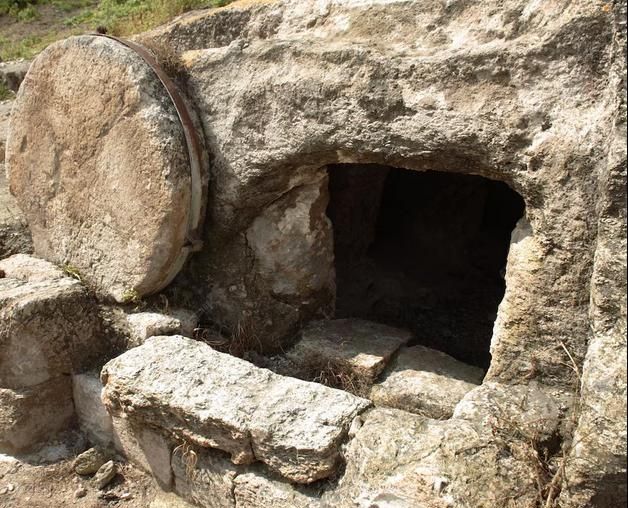
In our two verses, the apostle has two stages to our salvation. First, in verse 9 we are justified by the blood of Jesus, which saves us from God’s wrath. Then having been reconciled to God, we will be saved by the life of Jesus (verse 10). He is talking about Jesus’ return to life on the third day. If Jesus had died and stayed dead, our faith would be futile, and we would still be in our sins, 1 Corinthians 15:17. Christ’s resurrection, stamping on the head of the Serpent, was the key to our own resurrection at the last day. Paul will return to this theme in the next chapter.
Scripture quotations are from The Holy Bible, English Standard Version® (ESV®), copyright ©2001 by Crossway, a publishing ministry of Good News Publishers. Used by permission. All rights reserved